Herbert Richardson
Just MercyHerbert Richardson was a Vietnam War veteran whose untreated trauma formed an essential part of the story of how he came to face execution. The war’s violence followed him home, compounding earlier losses and difficulties; years later, the court that sentenced him to death heard none of that history from his appointed lawyer.
Military Service and Trauma
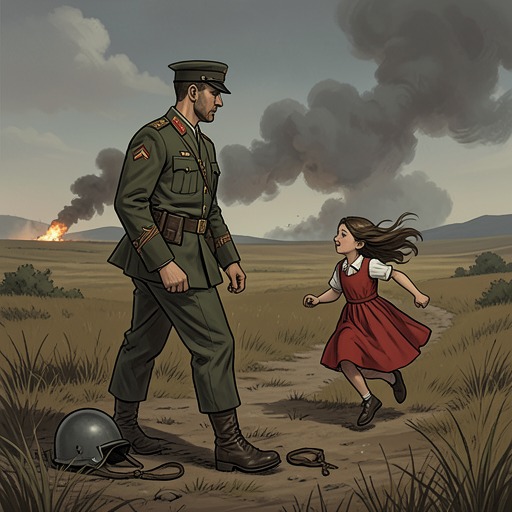
Herbert enlisted in the United States Army in 1964, aged eighteen, as the United States was deeply involved in combat. Assigned to the 11th Aviation Group, 1st Cavalry Division, he was sent to Camp Radcliff in An Khe, near Pleiku, an area marked by intense fighting in the mid-1960s. His missions exposed him to the deaths and serious injuries of fellow soldiers. In one ambush, his entire platoon was killed and he was badly wounded. When he regained consciousness, he was disoriented, unable to move, and covered in the blood of the men who had been with him.
Herbert’s mental health deteriorated amid the aftermath of the ambush and the pain of his injuries. He attempted suicide after suffering severe headaches. Although his commanding officers referred him for psychiatric evaluation several times, he remained in combat for seven months. In December 1966, crying outbursts and withdrawal that left him unable to communicate preceded his honorable discharge. The discharge ended his military service, but not the effects of what he had experienced.
Back in Brooklyn, Herbert suffered nightmares and disabling headaches. At times he ran from his home screaming, "Incoming!" He married and had children, yet post-traumatic stress disorder continued to undermine his ability to manage his behavior. He eventually entered a veterans hospital in New York City, where his recovery from severe head pain associated with his war injuries was slow and difficult. His life after service thus carried the war into the civilian world, not as a closed chapter but as an ongoing source of distress.
The account also places his military trauma against earlier hardship. Herbert’s mother died when he was three; he had experienced physical abuse as a child and struggled with drugs and alcohol as a young teenager, before enlisting. The war added another profound injury to a life already marked by loss. The narrative’s later questions about who had been present when he was a child, when he returned traumatized, and when he needed help underline the gap between the urgent attention he received on the day of his execution and the support absent across the years that preceded it.
The Bombing and the Death Sentence
After returning from military service, Herbert became fixated on a former girlfriend who lived in Dothan, Alabama. When she refused to see or speak to him, he moved closer to her home, interpreting her distance as temporary confusion rather than a clear rejection. His reasoning grew increasingly irrational and dangerous. He devised a plan to make her feel threatened so that he could appear as her protector: he would put a small bomb on her porch, set it off, and then rush to help her. The plan joined his technical aptitude to an obsession that had displaced judgment; the account describes it as reckless even by the standards of a combat zone, let alone a poor neighborhood where children moved freely through the streets.
One morning Herbert assembled the bomb and left it on the porch. His former girlfriend was not the first person to encounter it. Her ten-year-old niece and another girl, aged twelve, came out and saw the unusual package. The younger child picked up the bag with a clock attached and shook it to see whether it would tick, triggering an explosion that killed her instantly and traumatized her friend. Herbert knew both children: they had visited his home for breakfast, part of a neighborhood life in which he welcomed children into his yard, cooked for them, and paid them to run errands. Watching from across the street, he saw the device kill a child he had cared for. He ran toward the house and found grieving neighbors gathered around the scene. His intended rescue had become the occasion for a child’s death.
The prosecution’s case turned on whether that death could qualify for capital punishment. Alabama law required intentional murder for a death-eligible offense, and the evidence described Herbert as having no intention to kill the child or anyone else. The state nevertheless advanced an unprecedented transferred-intent theory. Herbert was advised to deny responsibility, but ultimately argued that the killing was reckless murder rather than capital murder—a distinction that left life imprisonment possible but excluded the death penalty. The legal dispute over intent thus concerned more than the label attached to the bombing: it determined whether the state could execute him.
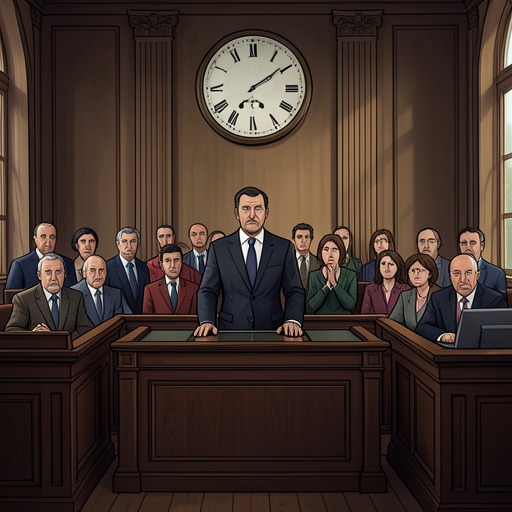
At trial, the appointed defense lawyer presented none of the history that might have placed Herbert’s actions and culpability in context. The jury heard nothing about his childhood, military service, war trauma, relationship with the victim, or fixation on his former girlfriend. Alabama then capped appointed lawyers’ compensation for out-of-court preparation at $1,000, and the lawyer spent almost no time preparing the case. Trial lasted just over a day; the judge imposed a death sentence soon afterward. The compressed proceeding left the human history behind the crime outside the courtroom record.
The failures continued after sentencing. Herbert’s appointed lawyer, later disbarred for poor performance in other cases, told him he saw no reason to appeal because the trial had been as fair as Herbert could expect. Herbert reminded him that he had been sentenced to death and wanted an appeal despite its uncertain prospects, but the lawyer filed no brief. Herbert remained on death row for eleven years. A volunteer lawyer eventually challenged the intent questions in a last-ditch appeal, without success. By the time his execution was scheduled for August 18, the state’s case had carried him from a short trial with no account of his background to the threshold of the electric chair.
The Last Twenty-Nine Days
The Equal Justice Initiative had moved to a new office in Montgomery amid the executions of John Evans and Horace Dunkins. On death row, the men were more agitated and unnerved than before. In July, Herbert received notice that the State of Alabama planned to execute him on August 18. He called Bryan Stevenson collect and asked for help, explaining that he knew Stevenson was helping some of the men and that a new office was opening. Herbert’s request was urgent, but the call also exposed a stark gap: he had no lawyer working for him.
Stevenson asked what Herbert’s volunteer lawyer had said. Herbert replied that the lawyer had stopped helping him more than a year earlier and that he had no one else. Stevenson was still trying to find a way to speak to condemned people about execution dates. Reassurance seemed impossible: telling a person not to worry about an approaching execution would ask too much, while an apology did not meet the need. After the first call, Stevenson remained unnerved through the day and could not sleep that night, troubled by his own hesitant response and by the silence that followed it.
Herbert called again the next day. He did not ask Stevenson to promise a stay or claim he could stop the execution. With twenty-nine days left, Herbert asked him to do something—anything—so that he would not have to face the remaining time without hope. Stevenson agreed to represent him, while making clear that he was uncertain whether anything could block the execution. Herbert thanked him for trying. The exchange makes the limits of legal advocacy plain, but also shows what Herbert sought from it: not a guarantee, but the assurance that someone would stand with him and act.
The reprieve the representation offered was not enough to change the outcome. Herbert had spent eleven years on death row, and a volunteer lawyer’s challenge to the intent questions had failed. On the evening of August 18, Stevenson accompanied him and his family through the final hours. Less than thirty minutes before the execution, he was taken to the cell beside the execution chamber. Prison officials had shaved the hair from his body to facilitate what they called a clean execution. The electric chair had not been modified after John Evans’s disastrous execution; the botched execution of Horace Dunkins the previous month weighed on Stevenson as he watched the preparations, unsure whether he could intervene if something went wrong.
Herbert was more visibly shaken when Stevenson saw him in the chamber than he had been during the visit. He took Stevenson’s hands and asked to pray. After they prayed, Herbert’s expression grew distant, then he thanked Stevenson for standing with him and acknowledged that the moment was difficult for Stevenson too. Stevenson hugged him. Herbert’s face, as Stevenson remembered it, sagged with sadness. The gesture of gratitude did not erase the imbalance between them: one man was about to die, while the other could only accompany him to the edge of the execution chamber.
Herbert described how, during the final fourteen hours of his life, people had repeatedly offered him food, water, coffee, stamps, and use of the telephone, asking what they could do to help. He found the attention strange because, as he told Stevenson, more people had asked what they could do for him that day than had asked during the years when he was growing up. His observation turned the execution-day kindness into an indictment of its lateness. Stevenson thought of Herbert’s childhood and the traumas that followed him home from Vietnam, and wondered where those helpers had been when Herbert was three and his mother died, when he was abused, when he struggled with drugs and alcohol, and when he returned from war traumatized and disabled. The question connects the approaching execution to the unaddressed suffering that preceded it: care arrived in abundance only when almost nothing could be done with it.
A cassette recorder had been set up in the hallway. As an officer brought over a tape, the strains of “The Old Rugged Cross” began to play, and Herbert was pulled away from Stevenson. The song marked the end of their brief time together and the transition from a final conversation to the state’s execution procedure. Herbert’s last appeal for hope had secured a lawyer’s presence and a witness to his fear, but it could not undo the years in which his history had gone unheard or prevent the state from carrying out its sentence.
Veterans and Incarceration
Herbert’s history also belongs to a wider pattern the account identifies: thousands of combat veterans enter jail or prison after military service, a postwar problem that has received little public attention. By the mid-1980s, nearly one in five people in United States jails and prisons had served in the military. That proportion declined during the 1990s as the Vietnam War’s effects receded, then rose again amid the conflicts in Iraq and Afghanistan. The pattern does not erase Herbert’s responsibility for the bomb or the child’s death; it places his return from war and his later imprisonment within a recurring failure to reckon with how combat trauma follows veterans into civilian life.